
What Is a Multiple Effect Evaporator? Working Principle, Types, and Industrial Benefits
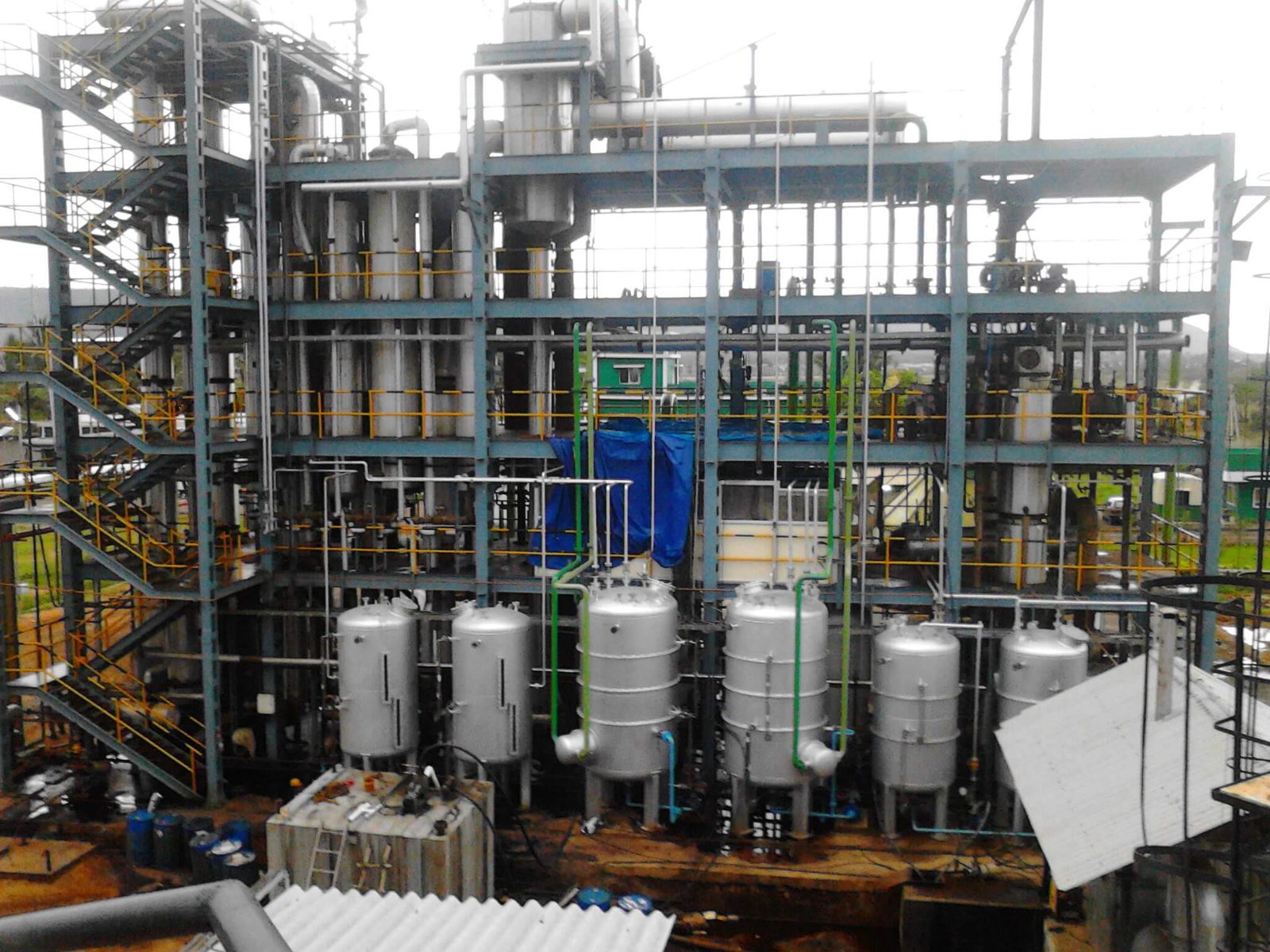
In modern chemical processing, pharmaceutical bulk drug synthesis, and Zero Liquid Discharge (ZLD) effluent treatment, concentrating liquid solutions while managing high energy costs is one of the most demanding engineering challenges. Industrial wastewater and process streams often carry high Total Dissolved Solids (TDS) and Chemical Oxygen Demand (COD), making simple single-stage boiling financially non-viable due to massive live steam consumption. A Multiple Effect Evaporator (MEE) solves this problem by utilizing the latent heat of water vapor generated in one stage to boil liquid in subsequent stages operating under successively deeper vacuums. In this comprehensive technical guide, you will learn how Multiple Effect Evaporators work, explore the primary flow configurations (forward, backward, and mixed feed), understand their critical industrial benefits, and discover how to optimize steam economy for maximum plant operational efficiency.
What Is a Multiple Effect Evaporator (MEE)?
A Multiple Effect Evaporator is an apparatus consisting of a sequence of single-effect evaporators (calandrias or heat exchangers coupled with vapor-liquid separation chambers) connected in series. The defining thermodynamic innovation of an MEE is heat reuse: rather than venting vapor produced from the boiling liquid into a condenser, that vapor serves as the heating medium for the very next effect.
To enable heat to transfer from the vapor of effect 'n' into the liquid of effect 'n+1', the boiling point of the liquid in the subsequent effect must be lower than the condensing temperature of the driving vapor. This temperature difference is achieved by operating each successive effect at a lower absolute pressure (deeper vacuum) maintained by a multi-stage steam ejector or vacuum pump system.
Thermodynamics and Steam Economy
Single vs. Multi-Stage Comparison
The primary operating metric of an evaporator installation is Steam Economy, defined as the mass of water evaporated per unit mass of live boiler steam supplied:
Steam Economy = Total Kilograms of Water Evaporated / Kilograms of Live Steam Supplied
- Single Effect Evaporator: Yields approximately 0.8 to 0.9 kg of evaporation per kg of live steam.
- Double Effect Evaporator: Delivers approximately 1.5 to 1.7 kg evaporation per kg of live steam.
- Triple Effect Evaporator: Achieves approximately 2.2 to 2.6 kg evaporation per kg of live steam.
- Quadruple Effect Evaporator: Reaches 3.2 to 3.8 kg evaporation per kg of live steam, saving over 70% in boiler fuel operating costs.
Flow Regimes and Feed Arrangements
3. Mixed and Parallel Feed
In high-fouling or crystallizing duties, raw feed is introduced into intermediate stages for pre-concentration and routed into dedicated forced-circulation finisher pans with conical bottoms to isolate crystalline slurries.
Key Industrial Benefits of Multiple Effect Evaporators
- Substantial OPEX Reduction: Reduces primary boiler steam demand by 60% to 80% compared to conventional single-stage boiling.
- Zero Liquid Discharge (ZLD) Compliance: Concentrates high-TDS effluents to saturation limits before feeding directly into dryers or centrifuges.
- High Water Recovery Rates: Recovers 85% to 95% of process effluent as high-purity condensate suitable for boiler feedwater makeup or cooling tower circulation.
- Corrosion-Resistant Custom Metallurgy: Fabricated in Austenitic Stainless Steels (SS304/SS316L), Duplex 2205, Titanium, and Hastelloy C-276 to withstand aggressive chlorides, sulfates, and acidic media.
- Automated Continuous Operation: Integrated with PLC-SCADA controls for automated vacuum regulation, density monitoring, and CIP (clean-in-place) washing cycles.
Frequently Asked Questions
Q1What is the difference between a Multiple Effect Evaporator (MEE) and a Mechanical Vapor Recompression (MVR) system?
An MEE utilizes multiple physical vessels operating at cascading pressures to reuse thermal vapor across effects using boiler steam. In contrast, an MVR evaporator compresses the vapor generated from a single vessel using an electrically driven high-pressure centrifugal fan/compressor, boosting its temperature and pressure so it can be recycled back into the same vessel. MEE is typically chosen when low-cost boiler steam is accessible, whereas MVR is favored when electricity costs are competitive and steam is limited.
Q2How is Boiling Point Elevation (BPE) handled in MEE design?
Boiling Point Elevation occurs as dissolved solids concentration increases, raising the boiling point of the solution above that of pure water at the same pressure. Chemical engineers compensate for BPE by designing larger heat transfer surface areas, optimizing temperature driving forces (ΔT) between stages, and often selecting backward feed configurations so concentrated liquor remains at elevated temperatures.
Q3What metallurgy is recommended for handling high-chloride pharmaceutical effluent?
For wastewater containing high chloride concentrations (>10,000 ppm), standard SS304 or SS316L is susceptible to stress corrosion cracking and pitting. Mathesis Engineers recommends Super Duplex Stainless Steel (2507), Titanium Grade 2, or Hastelloy C-276 for heating tubes and vapor-liquid separator contact zones to ensure a 15–20+ year operating lifecycle.
Q4How many effects can an MEE system economically have?
While theoretically more effects yield higher steam economy, practical thermodynamics dictates that the available overall temperature difference between boiler steam (~120°C–140°C) and cooling water vacuum condenser (~45°C–50°C) must be split among all effects minus the cumulative BPE. In chemical and pharma industries, 3 to 5 effects represent the optimal balance between capital investment and steam savings.
Multiple Effect Evaporators represent the backbone of energy-efficient thermal separation in chemical, pharmaceutical, and environmental engineering sectors. By cascading heat recovery across multiple pressure-regulated stages, MEE systems achieve massive boiler steam savings while delivering high-purity distilled condensate and concentrated slurry for zero discharge compliance. Selecting the right flow sequence, tube geometry, and metallurgy ensures long operational uptime and reliable fouling resistance.
Design a Custom Multiple Effect Evaporator for Your Plant
Consult Mathesis Engineers for thermodynamic sizing, mass & energy balance simulations, and custom ASME/IS code fabrication tailored to your process effluent specifications.