
Understanding Industrial Drum Flakers: Working Mechanism, Feed Types, and Applications
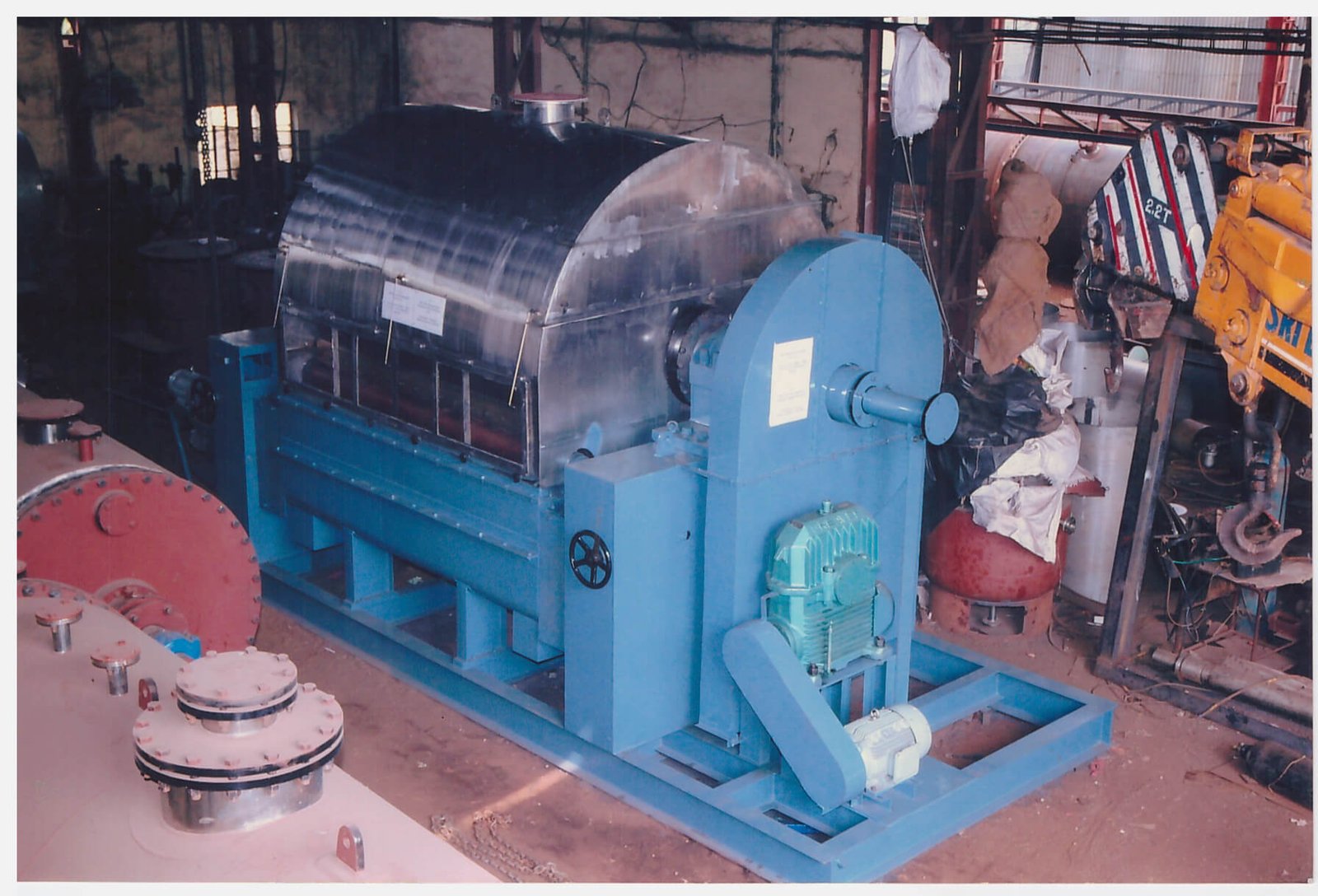
In the chemical, petrochemical, resin, agrochemical, and pharmaceutical industries, countless products are synthesized as molten liquids or viscous hot melts that must be converted into solid, dry, and easily packable forms for packaging, storage, and downstream processing. Traditional batch pan solidification or manual cooling trays are labor-intensive, create inconsistent particle sizes, and pose severe occupational safety hazards. An Industrial Drum Flaker (also known as a cooling drum flaker or rotary drum cooler) provides a continuous, highly controlled single-step solution that converts hot molten liquids into uniform, free-flowing solid flakes. In this article, you will learn the working principle of drum flakers, compare the major liquid feed mechanisms (dip feed, applicator roll, and agitator roll), and understand how precision knife blade design prevents drum wear while maximizing flaking output.
What Is an Industrial Drum Flaker?
An Industrial Drum Flaker is a continuous contact cooling device designed to solidify molten liquids onto the outer surface of an internally chilled rotating cylindrical drum. As the cooled drum revolves through a molten bath, a thin layer of molten product adheres to the outer shell, rapidly transfers its sensible and latent heat into the internal cooling medium, and crystallizes into a solid sheet.
Before the drum completes one full revolution (typically between 270° and 300° of angular travel), an adjustable scraper knife—known as a doctor blade—cleanses the solidified sheet from the drum surface, breaking it into uniform, marketable flakes that fall into an integral product discharge hopper.
The Working Mechanism: Step-by-Step
4. Doctor Blade Scraper Discharge
The doctor blade cleanly peels the solidified product sheet from the shell. An optional flaker knife serration or breaker shaft can be installed below the knife to standardize flake sizing.
Comparison of Drum Flaker Feeding Arrangements
3. Agitated Feed Pan
Features low-speed internal paddle agitators in the bottom pan to maintain uniform suspension of slurries containing insoluble catalysts, fillers, or crystalline seed particles that would otherwise settle out.
Critical Engineering & Design Considerations
- Internal Cooling Distribution: High-velocity internal spray nozzles or jacketed annulus designs ensure uniform heat extraction across the entire face width, eliminating cold and hot spots.
- Doctor Blade Metallurgy: The scraper knife blade must be engineered with controlled hardness slightly lower than the drum shell or hard chrome plating, preventing drum scoring while delivering crisp cutoff.
- Variable Frequency Drive (VFD): Rotational drum speed is dynamically modulated (typically 1 to 15 RPM) to adjust retention time based on batch solidification kinetics.
- Enclosed Vapor Tight / Vacuum Hoods: For toxic, hygroscopic, or solvent-laden chemicals, drum flakers are enclosed in vapor-tight hoods with nitrogen blanketing and HEPA exhaust filtration.
Frequently Asked Questions
Q1What molten materials are commonly processed on Industrial Drum Flakers?
Drum flakers are widely used for fatty acids, stearates, sulfur, caustic soda (NaOH), maleic anhydride, phthalic anhydride, polyethylene waxes, phenolic resins, hot melt adhesives, pesticide intermediates, and pharmaceutical excipients.
Q2How is flake thickness adjusted on a drum flaker?
Flake thickness is adjusted primarily by altering the drum rotational speed via the variable frequency drive (slower speeds allow a thicker film to solidify, while faster speeds produce thinner flakes), adjusting molten liquid level/temperature in the dip pan, or regulating the gap between the applicator roll and main drum.
Q3What cooling media can be used inside the cooling drum?
Depending on the solidification point of the product: industrial cooling tower water (for products solidifying above 50°C), chilled water at 7°C–10°C (for solidification between 25°C–45°C), or chilled ethylene glycol/brine at sub-zero temperatures down to -15°C (for low-melting organic chemicals).
Q4Can drum flakers operate under vacuum or inert atmosphere?
Yes. For products that are oxygen-sensitive, toxic, or hazardous, Mathesis Engineers designs enclosed vacuum flakers or nitrogen-purged hermetic enclosures complete with glove ports, sight glasses, and automated dust-free packaging interfaces.
Industrial Drum Flakers provide a continuous, energy-efficient, and reliable method for converting molten chemicals into uniform solid flakes. By eliminating manual cooling labor, reducing dust hazards, and delivering consistent flake thickness, drum flaking streamlines downstream packaging and compounding operations. Selecting the appropriate feed configuration and precision scraper metallurgy guarantees high productivity and extended equipment lifespan.
Optimize Your Continuous Flaking Process
Consult Mathesis Engineers for custom drum flaker sizing, lab-scale pilot testing, and complete fabrication in SS304, SS316L, or Hard Chrome Plated Carbon Steel.